-
Junior Member
registered user
Linux to WinBlows File sharing cmd - explanation needed
Hi there from Perth, Western Australia first up 
I have been using Debian for about a week and finding it quite a learning curve indeed! Setup was a breeze and with the help from a friend over the internet, i redirected my sources.list from the default German? site, to a local FREE provider of traffic.... d/l and installed the updates fine to.
Then came the time when i wanted to connect to my WinBlows machine and view my movies and mp3's etc etc.... So i started off by reading the document at http://www.knoppix.net/docs/index.php/FaqSambaQuick and following the instructions...... After a few trys and thought i came to connect to my WinBlows machine with the following command:
mount -t smbfs -o username=administrator,password=flippers //Karma/C$ /mnt/myshare
WHAT I WANT TO KNOW IS: What does this mean lol? I would like an explanation on what each section of that command means and why it is like that order if possible?
Nothing worse than doing something, it working, and then wondering what it means...
Thanks to anyone who replies.
-
If you type 'man mount' on the command line, you will see the following
Code:
MOUNT(8)                       Linux Programmer's Manual                       MOUNT(8)

NAME
       mount - mount a file system

SYNOPSIS
       mount [-lhV]

       mount -a [-fFnrsvw] [-t vfstype] [-O optlist]
       mount [-fnrsvw] [-o options [,...]] device | dir
       mount [-fnrsvw] [-t vfstype] [-o options] device dir

DESCRIPTION
       All  files  accessible  in  a Unix system are arranged in one big tree, the file
       hierarchy, rooted at /.  These files can be spread out over several devices. The
       mount  command  serves to attach the file system found on some device to the big
       file tree. Conversely, the umount(8) command will detach it again.

       The standard form of the mount command, is
              mount -t type device dir
       This tells the kernel to attach the file system found on  device  (which  is  of
       type  type)  at the directory dir.  The previous contents (if any) and owner and
       mode of dir become invisible, and as long as this file system  remains  mounted,
       the pathname dir refers to the root of the file system on device.
The synopsis shows you all the general forms of the command, in your case you typed the last one, which is explained in the last paragraph I included of the description.
In order to help you understand this, you need to realize the different ways in which Windows and UNIX/Linux/Knoppix handle filesystems.
Under Windows, just as an example, if you have two hard disk, each with one partition on, then the first disk will appear as C: and the second will appear as D:. If you put a CD in your drive, it will appear as E:. Any folders shared from other computers that you attach can appear as any letter from F: to Z:.
Under UNIX/Linux/Knoppix, we don't use drive letters. Instead your first filesystem is always known as the root filesystem, and is denoted as /. All other filesystems are then 'mounted' or attached at some point within the directory structure underneath /.
The last two arguments of your mount command - the device and dir ones - basically say "take the filesystem that is contained on this device and make it appear at this directory under root".
Now, the mount command is general purpose, and is used to mount everything including hard disks, cd's, floppy disks and also folders shared from other computers. Obviously each kind of filesystem needs to be handled differently, so one of the first things you need to tell mount is which kind of filesystem it is dealing with. This is the -t command and the smbfs argument says that it is a Windows SMB share.
Each type of filesystem also needs additional options which are specific for that type. These come after the -o flag. For Windows shares, we need to specify a username and password, which are just as you have shown them.
Now in the case of a shared folder, the device is not really an actual device at all, but rather what I think MS calls a UNC or something, which - as you are probably aware - looks like \\machinename\sharename.
So, if we break down your command into its constituent parts....
invoke the mount command
tell if we want to attach a share from a Windows machine
Code:
-o username=administrator,password=flippers
options specific to this share, the username and password for the remote machine.
the "device" we want to attach, in this case actually the share C$ on the machine called Karma
we want all of the files and directories in the remote share to appear as though the are in the directory called /mnt/myshare on the local machine.
-
Senior Member
registered user
In linux there is usually more than one way to accomplish the same thing. Here's a variation that also works to mount a remote share-
smbmount //$hostname/$sharename /mnt/netdrive -o username=$username
Just change this command so that $hostname is the host you want to connect to, $sharename is the name of the share, and $username is the name of a user who can access the share.
To avoid confusion and permission problems I make a user called knoppix on the windows computer and set $username as knoppix when running the script.
You'll then be prompted for $username's password, and the share will be mounted to /mnt/netdrive.
Similar Threads
-
By sepekte in forum General Support
Replies: 0
Last Post: 05-11-2005, 11:48 PM
-
By shiva_iitm in forum Networking
Replies: 1
Last Post: 03-13-2005, 08:02 AM
-
By spartyguy in forum Networking
Replies: 1
Last Post: 05-21-2004, 04:36 PM
-
By slicksps in forum The Lounge
Replies: 3
Last Post: 11-18-2003, 12:24 AM
-
By beachbumtroy in forum General Support
Replies: 1
Last Post: 03-10-2003, 08:48 AM
 Posting Permissions
- You may not post new threads
- You may not post replies
- You may not post attachments
- You may not edit your posts
-
Forum Rules

Fujinet 1.7.1 Atari 400 800 800XL 130XE 65XE XEGS Assembled, Tested, Working
$99.99
Atari 800 8-bit Computer System Fully Tested Great Condition 48k READ
$350.00

UNOCART-2600 SD card Multi Rom Cartridge for ATARI 2600 with CASE
$34.25
VTG Atari 1200XL Home Computer System 1200 XL ** Tested ** Parts or Repair
$323.75
SOLD AS IS Lot of 5.25" Floppy Disks w/ Games & Software? Commodore 64 Atari 800
$59.99

Golf Challenge - Sierra On-Line - 1982 / Atari 400/800
$199.95
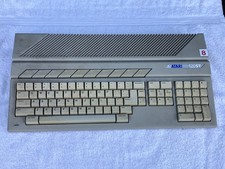
Atari 520ST Vintage Home Computer Keyboard Unit
$199.97
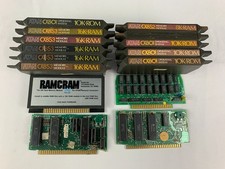
Atari OS & Memory Expansion Cartridges Lot - Untested Possibly For Parts/Repairs
$149.97
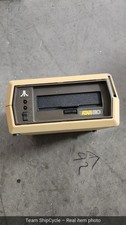
DEFECTIVE Atari 810 Vintage Computer Disk Drive powers on Unit Only Boo G3D
$49.29
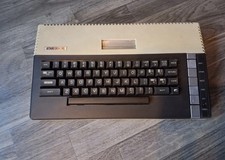
Atari 800XL Computer Bundle Tested Fully Working
$299.00



 Reply With Quote