-
Senior Member
registered user
Depends
I'd need a lot more info to give a definitive answer.....
Changng to a switch won't hurt anything but unless you have a gigabit uplink between the switches the workstations will still be limited to a single 100Mbit connection to router port3 and hence the rest of the network.
Therefore those workstations will have faster communication with each other but the same with everything after the switch on the router side.
Think of a hub as splitting the netowrk bandwidth between the workstations whereas a switch provdies them all with the full bandwidth...
The slowest part of all this will be the switch-switch connection. If this is still 100Mbit then that will be the maximum or weakest link in the chain.
Draw it all out on paper and you'll see what I mean.
Looking at your network it seems to have geographical constraints....
The hubs are used to extend the network
Its not simple to draw up a best solution without knowing geographical constraints and stuff ...(like future expansion)
Soln1: Upgrade the router to a gigabit capable router
then route gigabit to the switch which feeds the high demand workstations....
(this will allow the weak link to be upgraded thus giving 4-5 workstations about 100Mbit) $1500 or so....
Soln 2 : Look at the whole insfrastructure
Soln:2 is future proofing... you might look at wireless etc.... and a gigabit backbone
What does your router actually do though....
Unless the PC's and the win2K server need to be on seperate subnets its unnecassary.
The ultimate question is what do the workstations do/need from the win2K server....
If its SAMBA then is the Win2K workstation capable of serving the files fast enough....
If its only a 100Mbit card in then it isn't becuase it has to share this with the rest.
In fact you will overload it becuase windows is crap at fileserving and it will devleop queues.
Sorry not to be more definititve but from what you say its difficult to give any better advice!!!
Similar Threads
-
By djarum in forum Networking
Replies: 3
Last Post: 06-27-2005, 05:39 AM
-
By pi8ch in forum Networking
Replies: 2
Last Post: 12-06-2004, 04:30 PM
-
By senorian in forum Hardware & Booting
Replies: 0
Last Post: 04-20-2004, 08:19 PM
-
By bob58 in forum General Support
Replies: 1
Last Post: 03-23-2004, 05:38 PM
-
By efi360 in forum General Support
Replies: 8
Last Post: 08-17-2003, 07:52 AM
 Posting Permissions
- You may not post new threads
- You may not post replies
- You may not post attachments
- You may not edit your posts
-
Forum Rules

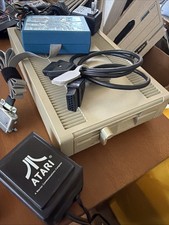
ATARI XF551 DISK DRIVE WITH AC POWER ADAPTER AND PARALLEL PORT ADAPTER, UNTESTED
$250.00

Happy 1050 Upgrade for Atari 1050 Disk Drive - Solderless Installation - HS/DD
$49.97
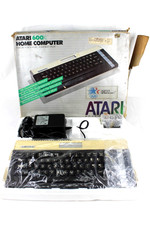
VTG Atari 600XL Home Computer System in Box ** Powers On ** Clean * Tested Works
$148.75
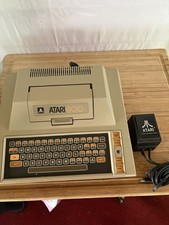
Atari 400 Home Computer System includes Power Cord G2U
$159.99
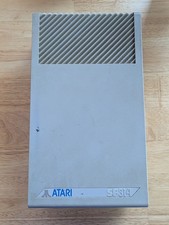
Vintage ATARI SF314 DS/DD 3.5" External Drive TESTED but can't read/write disks
$69.99
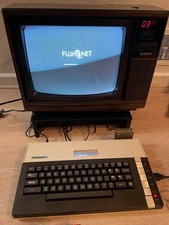
Fujinet 1.7.1 Atari 400 800 800XL 130XE 65XE XEGS Assembled, Tested, Working
$99.99
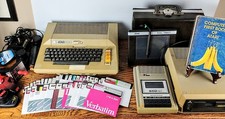
Vtg Atari 800 Complete Computer System Lot Games Controllers Disk Drive Recorder
$499.99
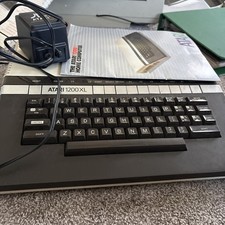
Atari 1200 XL home computer with original owners guide and power supply power on
$255.00
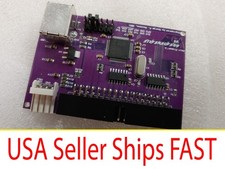
GreaseWeazle v4 board USB floppy drive adapter Retro All Formats
$35.00
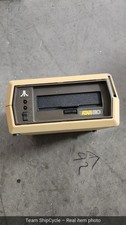
DEFECTIVE Atari 810 Vintage Computer Disk Drive powers on Unit Only Boo G3D
$49.29



 Reply With Quote