-
Senior Member
registered user

Originally Posted by
Cuddles
I guess this is the same as the "Black Hole" that needs to reside between 640k and 1 meg in memory maps - because "good ol' M$" - in its "infinate" wisdom, thought that (1) no one would ever go above 1 meg, and so the OS always sets the hole in memory for system/ROM/and such, which was only "recently" (in computer history terms) openned up to be used as "high memory" loading. And (2) M$'s OS's had to have "something" that was consistant in any computer, with any hardware, and with any amount of memory. (wonder if any of the new Win OS's ever got around the "hole" in memory yet?)
No you have got Intel to thank for that one MS had nothing to do with it and it is still there to this day in any system you buy that is based on x86 architecture which is pretty much any personal PC sold. Just look at you boot messages from the BIOS you will see what I mean there is still the extended memory above that registered with the system.
...Sometimes, the more I think about it, I am astonished that M$ had gotten as big as it has, with all these issues (stuck in their OS). I guess when they (M$) started going more toward the NTFS structure, they got away from a lot of the "baggage" that FAT came with.
Not suprising at all when you consider the illegal business practices they have employed all these years and finally have been convicted of with little tangible result unfortunately.
Thanks to you both for the enlightenment on the Linux innerds (yesh, that has to be misspelled)
Cuddles
That would be innards and since you run linux and have the program already installed you can:
Code:
>$ dict innerds
No definitions found for "innerds", perhaps you mean:
gcide:  innards
wn:  innards
moby-thesaurus:  innards
Or if you upgrade to KDE 3.2 you can have the spell checking on the fly when typing into most any dialogs or windows plus a whole lot of other goodies. Works for acronyms like YMMV if you have the proper dictionaries installed as well.
Similar Threads
-
By crism in forum Hardware & Booting
Replies: 6
Last Post: 12-28-2004, 06:46 PM
-
By Spool32 in forum Laptops
Replies: 4
Last Post: 11-18-2004, 08:26 PM
-
By MR.Error in forum General Support
Replies: 1
Last Post: 09-27-2004, 06:58 AM
-
By Neo855 in forum General Support
Replies: 3
Last Post: 02-23-2004, 03:14 PM
-
By freyley in forum Hdd Install / Debian / Apt
Replies: 1
Last Post: 01-31-2003, 09:21 AM
 Posting Permissions
- You may not post new threads
- You may not post replies
- You may not post attachments
- You may not edit your posts
-
Forum Rules

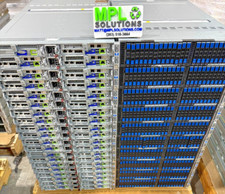
NETAPP HCI NAF-1701 SuperMicro Server 4X BLADE H410C 8X GOLD 5120 - 4X S25G NICs
$1999.97
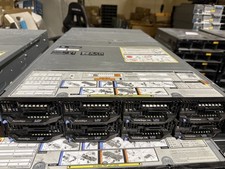
Dell PowerEdge FX2s + 8x FC430 Blades 16x E5-2630v4 160 Cores Rails No PSU/RAM
$699.00
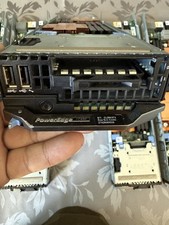
Dell PowerEdge FC430 Blade Server 2x Xeon E5-2630v4 20 Cores FX2 FX2s No RAM/HDD
$119.99
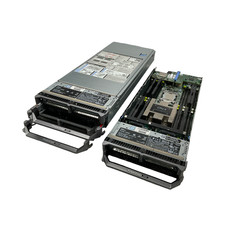
Lot of 3 Dell PowerEdge Blade Server HHB005 x2 HHB006 x1
$256.49
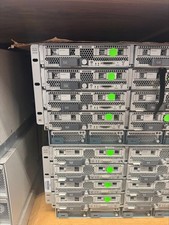
LOT (8) Cisco UCS UCSB-B200-M5 2x6248R 24 core 3.0G 24x64g DDR4-2933 ram
$112000.00

Dell PowerEdge FX2 FX2s Server 10GbE CMC Blade Enclosure Chassis
$274.99
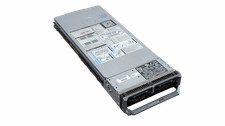
Dell PowerEdge M620 Blade Server 2x Xeon E5-2680v2 2.8ghz 20-Cores | 128GB
$149.99
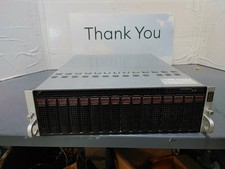
SuperMicro 938-16 5039ms-h8trf 3U MicroCloud SuperServer w 8 X11SSD-F Blades 2PS
$899.00
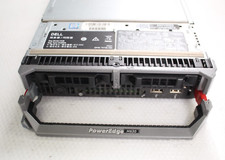
Dell PowerEdge M630 Blade Server 2x Xeon E5-2680 v4, 2F3MP , 4GDP5 ,R10KJ ,JVFVR
$96.60
NEW DELL TRUSTED PLATFORM MODULE TPM 2.0 POWEREDGE T430 T630 G13 SERVERS K98XH
$199.00



 Reply With Quote