

 Reply With Quote
If you just get Smart Boot Manager you can boot any cd from a machine that otherwise cannot boot from cd.
http://btmgr.sourceforge.net/


Can some kind soul take my hand and guide me through this step by step? It doesn't look hard but I am new at this and it's painfully obvious I am doing something wrong because I have suffered humiliating defeat countless times.
"In order to start the CD, first adjust the boot list in the BIOS Setup of your computer to boot from CD (before the hard drive). Put the CD in and restart the computer. If your computer does not support this option, you must use a boot diskette, which you can create with the help of the boot image /KNOPPIX/boot.img available on the CD. Use the mkfloppy.bat script for the regular boot image (German version). Use the command rawrite2 -f boot-en.img -d A (in the KNOPPIX directory) to create an English boot disk."
If you just get Smart Boot Manager you can boot any cd from a machine that otherwise cannot boot from cd.
http://btmgr.sourceforge.net/
I went to Source Forge as instructed and made 2 floppies, one, “Smart BootManager 3.7 release 1” and another, “sbminst.exe.” I am still at square one though. I’ve not had much time to devote to solving my problem until today.
The computer I am attempting to get to accept Knoppix is an old DELL Dimension P75t,
BIOS Version A00
Pentium –75
External Cache: 256 KB
Video Memory: 8192 KB
RAM: 8.0 (I now know that is unacceptably low and will scout up more memory)
Windows 95
I have set the boot sequence: Diskette First
All I get is—
“Invalid System Disk
Replace the Disk and Then Press Any Key”
I did read in another thread that old Dells sometimes require switching on and THEN plugging the tower in. That didn’t help.
What else can I try?
did you put the exefile in a bootable dos floppy?
if not try to format it with thr switch /s as in
format a: /s
THEN copy the smbinst.exe and sbminst onto that diskette.
atleast i think so. i have not used it in DOS ariant before, i have used the static linux variant together with tomsrtbt.
Now, could you or someone else please dumb your instructions down for me please? Regretably, my skill level is not up to speed yet.
A grandfather of 6, I'm beginning to wonder if I'll live long enough to rid myself of Microsoft.
In most computers you are able to change the device boot sequence in bios.
BIOS instructions load from an on board memory chip called an EPROM which contains basic power up instructions and parameters for the computer that are needed before an operating system can load.
When you first power on your system you can access the bios directly with a key command on most systems.
Usually pressing and holding the “Delete” key will pop you into the bios (blue) screen.
Some system boards use a different key, F1 (IBM) or F2 (Intel) are also popular.
Once the bios screen has appeared one of the top menus should have a heading something like “boot”.
Tab over to that column and enter.
One of the items should be a list of the boot order.
It is usually:
Floppy
Hardrive xxxx
CDROM
Network.
This simply means that the computer will look to these devices in this order for an operating system or a boot image.
You can change this order to:
Floppy
CDROM
Hardrive xxxx
Network
This will allow the computer to boot from knoppix cd.
(or any bootable cd if present).
Once you make the change proceed to the exit menu, save the changes and exit.
If a CD with a boot image is absent the bios will simply look for the next device on the list which in this case is the Hardrive and boot from that so you don’t need to change the boot order back when finished with knoppix.
Write down any changes you make because you can always reverse the them.
Perhaps ask a friend with some bios experience.
Hope this helps.
Regards
if you have Windows,
download the sbm-inst.exe, and save it at C:\ (top level or so called "root" of drive C
open up a console (dos prompt),
accessible by
WinNT/2000/XP/2003: Start -> Run -> CMD
Win95/98/98SE/ME: Start -> Run -> command
then insert a diskette and do the following:
sbm-inst.exe A:
optionally first get help by: sbm-inst /?
this creates a diskette with the Smart Boot Manager. It uses a custom filesystem so you cannot read the diskette from Windows anymore.
on the P75,
insert the diskette and try to boot from it.
perhaps you need to change BIOS sequence.
a precompiled bootdisk using FreeDOS and added SBM is available from:
http://fdos.org/ripcord/beta9rc5/fdos1440.img
(first option1 to boot into Syslinux, then option 3 to boot into SBM)
 Posting Permissions

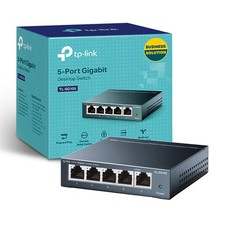
TP-Link TL-SG105 5-Port Gigabit Ethernet Unmanaged Metal Desktop Network Switch
$19.99
Cisco Catalyst 2960-48TT-L 48-Port Fast Ethernet Managed Rackmount Switch
$46.99
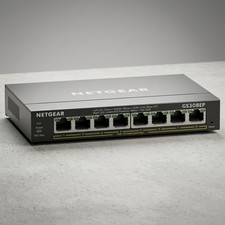
NETGEAR GS308EP Essential Series 8-Port Gigabit PoE+ Unmanaged Switch
$49.99

Cisco WS-C3650-12X48UR-L 48-Port Stackable Layer 3 8x10G SFP+ Port Switch
$129.99
10-Port Gigabit PoE Network Switch with 8 PoE+ Ports with 2 Combo SFP Slots 125W
$39.99
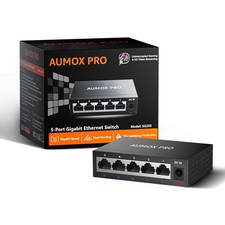
5 Port Gigabit Unmanaged Ethernet Switch, Home Network Hub, Office Ethernet S...
$9.64
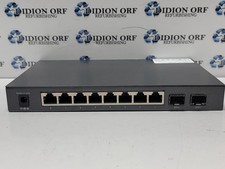
TP-Link TL-SG2210P 10-Port Gigabit Smart Switch w/ 8-Port PoE+ NO AC SKU 25597
$36.98
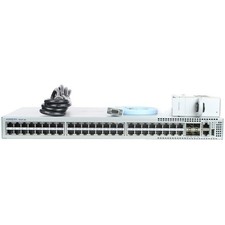
Arista DCS-7010T-48-R 48P 1GbE 4P 10GbE SFP+ RA Switch with rack mounts
$69.00
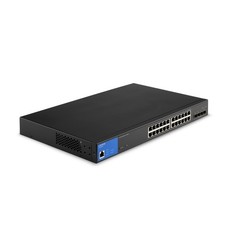
Linksys LGS328MPC 24-Port Managed Gigabit PoE+ Switch with 4 10G SFP+ Uplinks
$224.95
5Ports Gigabit Network Switch w/ 4 PoE+ Ports Total 52W each port 30W Plug&Play
$31.99
