

 Reply With Quote
Could you be a little more elaborative.Originally Posted by utu

Does this mean that when download is done diretly on disk or on persistent image?


.
I think there is a need for some built-in protection in Knoppix 6.7
to prevent the ruination of LiveUSBs that have been given a task that
turns out to be catastrophic.
What I have in mind is the bad result which occurs after starting a
download that proves ultimately too large for the LiveUSB to accommodate.
This ultimately fails, but also renders the LiveUSB inoperable without
extensive repairs or re-installation.
Couldn't there be some built-in surveillance to monitor for this
condition and head it off with some timely warning or corrective action?
Training the operator and/or using a larger USB are not solutions of interest.
Could you be a little more elaborative.
Does this mean that when download is done diretly on disk or on persistent image?
@ vkrishn
For example:
I now have about 400 MB unused on my LiveUSB with persistence.
If I were to initiate a 700 MB download, that would proceed
until the device was 'full' at which time I would get a
warning 'no more room on the device'.
At this point the LiveUSB is corrupted and will not reboot
after shutdown. I think some some protection against this condition
is in order.
The few work-arounds I've tried are all harder than simply
re-installing from a previously arranged clone copy of the LiveUSB.
I guess that means using the space on disk directly and not inside the persistent storage.
The reason I asked, I have few usb installation wanted to be careful.
Did you try installing Knoppix in one partition of the disk and persistent/downloads on another partition, to see if the problem still exists?
Here are two ideas:
1. One could change IceWeasel's Edit>Preferences>General>Downloads
FROM: 'Save files to {/home/knoppix/Downloads}'
TO: 'Always ask always ask me where ...'
2. If there is a 'good' answer to 'where' then one might change the
default to that, instead of 'ask me where'.
Leaving IceWeasel set to its download default is asking for trouble
for those downloading into OS media of relatively limited size.
And you cannot reboot with cheatcode "knoppix noimage"? Of course your persistent memory is damaged, but you can use your backup.At this point the LiveUSB is corrupted and will not reboot
after shutdown.
Thanks, Werner.
The 'noimage' approach is one means of RECOVERY that I've used.
What I was searching for here is a means of PREVENTION.
What with the cost of USBs coming down, there's not much
justification anymore for 2 Gb installs like I've championed up to now.
My favorite current configuration is a 16 Gb USB with 2 GB partition
and the remainder formatted ext3 with kn-recombine on it.
I can just as well shift downloads to that partition and not run
into the 'disasters' anymore.
Cheers.
 Posting Permissions

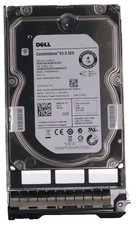
Dell 6P85J 4TB ST4000NM0063 7.2k 6Gb/s 3.5” SAS SED Hard Drive with Tray
$39.99
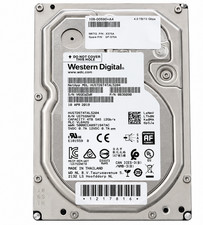
Western Digital HUS726T4TAL5204 4TB 7.2K SAS 12Gb/s 3.5" 512e HDD NetApp X375A
$64.00

DELL 2TB Enterprise HDD (7200RPM, 3.5", SATA III, 128MB Cache) HUS722T2TALA600
$49.95
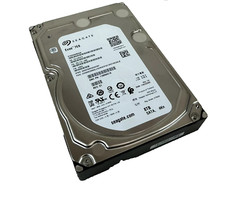
(ST8000NM0045) SEAGATE ENTERPRISE 8TB 7200RPM 4Kn SATA 6Gb/s 3.5" HARD DRIVE
$199.99
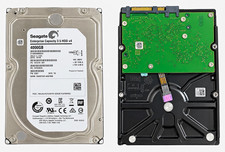
Seagate ST4000NM0034 Enterprise 4TB 7200RPM SAS 12Gb/s HDD v4
$39.00
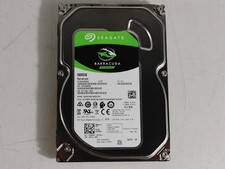
Seagate ST500DM009 BarraCuda 500 GB 3.5" SATA III Desktop Hard Drive
$14.99
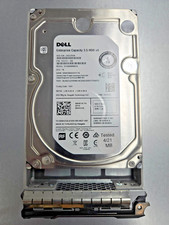
Dell ST6000NM0034 1HT27Z-150 NWCCG 6TB SAS 3.5 7.2K ENTERPRISE SERVER DRIVE
$68.99
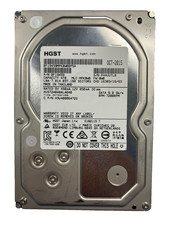
HGST HUS724040ALA640 HDD 4TB SATA 6Gb/s 7.5K 3.5" 0F19459 512 b/s
$78.00

Seagate ST8000NM0075 Enterprise Capacity 3.5 HDD 8TB SAS Hard Drive 8TB EXOS
$184.99
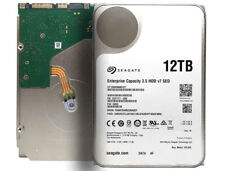
Seagate ST12000NM0127 12TB 256MB 7200RPM 3.5" SATA 6.0Gb/s Enterprise Hard Drive
$318.99