-
Senior Member
registered user
Tom,
As j.drake suggests, a big mistake "many" people have is that the ISO is an "image" file, and not just a file... Coming from the World of Windows, I know that there is LOTS of file extensions, ICO, ISO, WAV, JPG, BMP, etc... too many to count, and whats worse, some of these extensions are for "specific" things, and still others, can be simply a data file.
ISO File Extension 101:
Actually, any time someone tells you the file is a "image", think of it like a ZIP file... The file can contain one, or more, files, packed inside, as is the case for ZIP, and so too, for ISO. Only differance is that the ISO file has a complete Operating System (OS), and all of its protections, file and directory structure, contained in it.
Have you ever copied a floppy disk? Do you only have one floppy drive? In most cases, you used an "image" for it. (or you had the option to use it) -=- If you want to "duplicate" a floppy, more than one time, you have the option to use an "image" of the Source floppy, to make additional Target floppies...
How this works:
When you duplicate a floppy, or any drives data (this includes a hard drive, or CD), it takes two devices to duplicate, one for the "input" and the other for the "output", in some cases, you only have one device, and its used for both processes. If both devices exist, like a CD reader and a CD writter, you would do a Disk-to-Disk copy, but when you want to make more than one, or you only have one device, this becomes a Disk-to-Image-to-Disk copy.
The "image" is a temporary file, used to hold the contents of the Source, or Input, and then can be used multiple times, to make the output, or Target -=- all without having to re-read the Source more than one time.
What people have done, as is the case with the ISO file, they saved the temporary file used to create the Target disk, and are distrubuting it to everyone. Using this "image" anyone can make the "exact" disk as the Source, without having the Source, or the file system, or the directory structure, or file permissions, or even the same Operating System, and it will turn out the same as if you had had the Source disk.
Hope this helps, if not for a little explaination,
Ms. Cuddles
 Posting Permissions
- You may not post new threads
- You may not post replies
- You may not post attachments
- You may not edit your posts
-
Forum Rules

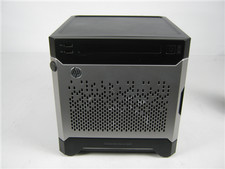
HP ProLiant MicroServer Gen8 Tower Server Xeon E3-1220 v2 2.3GHz 16GB RAM
$289.99
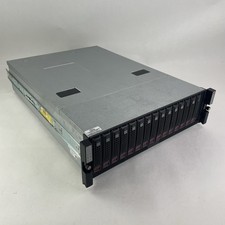
Supermicro CSE-937 3U Storage Chassis No CPU No HDD No Ram Tested & Reset
$129.99
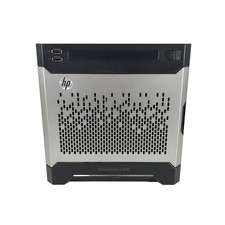
HP Proliant MicroServer Gen 8 2.23GHz Xeon 16GB RAM NO SSD
$249.99
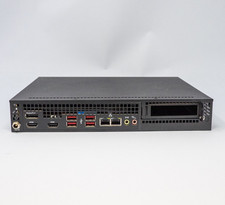
Supermicro E300-12C Mini 1U Barebone X12SCV-LVDS LGA1200 SNK-P0073A4 w/ Adapter
$225.00

Supermicro 5019D-4C-FN8TP Xeon D-2123IT (4C/8T) 64GB DDR4 10GbE 480GB 1U Server
$649.00
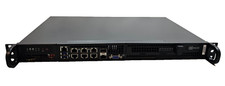
New Barebones Supermicro 5019D Server, 4C/8T Xeon D-2123T, 1U Rackmountable, 10G
$449.99
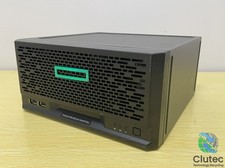
HPE ProLiant MicroServer Gen10 Plus 32GB RAM Xeon E-2224 3.40Ghz No HDD No AC
$750.00
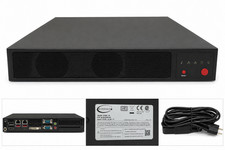
Supermicro SuperServer E300-15 - SYS-e300-9C - 16GB RAM 240GB Samsung SSD
$199.99
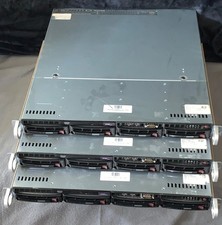
POGO ATLAS 1102 Server 32 Gb RAM 4TB Storage 2x2TB HDD’s (Tested-Working) No OS
$179.85
Supermicro 938-16 16-LFF MicroCloud SuperServer 5038MR-H8TRF *No Blade Servers*
$159.99



 Reply With Quote