

 Reply With Quote
There is no reason to use the debian kernel.
Many people run debian ( or any other distro ) with a custom compiled kernel and it's still debian.


Hello all,
I'm wanting to take knoppix to sid/unstable. I have read and followed the howto (http://www.knoppix.net/forum/viewtopic.php?t=2251#10541) and it works perfectly, but I'm still wondering about the kernel.
It doesn't seem like it's truly sid unless you run one of the sid kernels (tell me if I'm off base here). Has anyone successfully done this? I tried to install a kernel-image once, but I must have screwed up the configuration somewhere since I got kernel-panic on reboot. I have a feeling this would kill alsa as well, so you'd have to remove knx-alsa and install the debian alsa packages, and no telling what else. I think it would be nice to have a leaner kernel specifically for my athlon, but if somebody knows better, please explain.
This kernel stuff is kinda wierd to me, so I'm trying to learn more.
As always, any help is appreciated.
Thanks,
soap
There is no reason to use the debian kernel.
Many people run debian ( or any other distro ) with a custom compiled kernel and it's still debian.
Have a look at /boot/syscong-blahOriginally Posted by soapee01
I beleive there are a few tweaks you can make in there for AMD. eadz is right tho- no need to change kernels. A kerenel is a kernel but of course people tweak them for this that and the other. This one just happens to be patched for xfs.
Do you mind explaining what this xfs (x font server??) stuff is?
The more questions people answer, the more questions I have. Thanks for your patience.
soap
XFS is a journaling filesystem w/ rapid recovery from system crashes and the ability to support extremely large disk farms.
XFS is licensed under the GPL. w00t!!!
XFS provides 32-bit and full 64-bit file capabilities and can handle filesystems up to 1 terabyte in size. The XFS file system integrates volume management, guaranteed rate I/O, and journaling technology for fast, reliable recovery.
File systems can be backed up while still in use!
If you are unfamiliar with journaling file systems- simply put- a journaling file system keeps a 'journal' of what it is writing at all times. In the event of a system crash the filesystem need only refer to the journal to know what was and what was not written back to the disk properly. Previously fsck had to check the ENTIRE disk after a crash- not anymore. The quick recovery time of a journaled file system is attributed to this fact. ReiserFS, JFS, XFS and ext3 are all journaled file systems.
 Posting Permissions

S-100 Vector Graphic 64K Ram Board (Altair, IMSAI)
$99.95
CP/M 86 1.1R 8086 Highmonitor 8 Inch Floppy Diskette 80s IMSAI Altair
$29.99
Computer Photo History Altair 8800 Philco 212 CDC 6600 DEC PDP-8 Apple 1 UNIVAC
$69.99
S-100 Vector Graphic 12K PROM/RAM Board (Altair, IMSAI)
$99.95
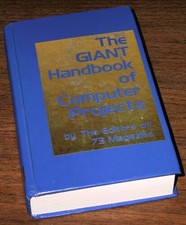
1979 Microprocessor Projects Altair 8800 Intel 8080 KIM-1 COSMAC Elf SWTPC 6800
$59.99
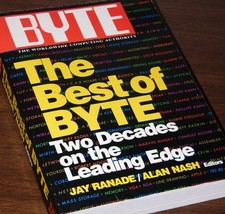
640pg Best of BYTE Magazine 1984 Mac Steve Jobs Altair 8800 IBM 5100 Bob Moog
$85.00
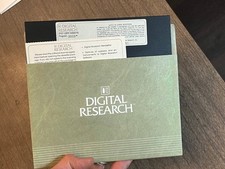
Vintage Digital Research ZSID 1.4 8" Floppy Disk CP/M Z80 Software S-100 Altair
$69.99
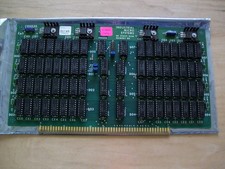
S-100 Industrial Micro Systems 8K Static Ram (IMS, Altair, IMSAI)
$69.95
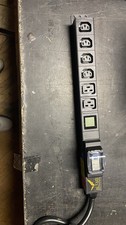
ALTAIR Bitcoin Mining Solutions PDU IEC SERIES 100-250V 30A/24A Power Distribute
$99.00
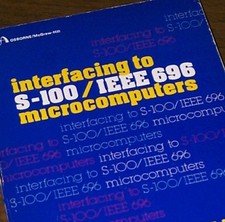
S-100 Bus Interfacing Handbook Altair 8800 IMSAI 8080 Z80 SOL-20 Intel 8080 DMA
$59.99