-
Senior Member
registered user

Originally Posted by
utu

@ Capricorny
You force me to reveal yet another layer of my ignorance.
I think I've done poor man's installs to linux-formatted partitions,
but I thought the rule was NEVER to write linux stuff to ntfs.
Virtual box didn't seem like a violation of that rule.
Kindly point me to some reading material.
Re-formatting was my initial interest; VirtualBox is interesting,
but I can come back to that.
No, I don't think you are ignorant! Conventional wisdom is don't write to NTFS, and for general,unrestricted use, I think that is still the safest advice. But poor man's installs are somewhat simpler than the general case, as just a few files are written, and except for knoppix-data.img, the rest are, mostly, read-only.
I have heard few reports of problems using NTFS this way, and I did my first poor man's install to NTFS/Win7 a few weeks ago - I try to avoid it, but not at any cost. Seems to work very well, and the same method that is used for creating the persistent image can be used for creating a larger volume for working - so you can effectively have two (or more) Linux partitions residing on an NTFS file system.
Again, I would try to minimize writing to NTFS, but for setting up a workplace for remastering, it should be ok. For permanent storage, I would have tried to shrink NTFS to make room for a native Linux partition, but I have no grave objections to using NTFS for a poor man's install - provided there are good back-up routines in place. After all, we only have to take care of one single file, and if the "install" gets corrupted, we just clean up and copy the files to disk once more.
Oh, and I should add: From Win7 viewpoint, cleaning up after such an install is just a matter of normal deletion of a few files. There is a small element of unsafety in that NTFS is mounted rw at /mnt-system - which means you have "automatic" access to all Windows files - also for corrupting them. But as long as you stay within /UNIONFS, there is not much of a danger AFAIK.
Last edited by Capricorny; 07-11-2011 at 12:04 AM.
-
Senior Member
registered user
@ Capricorny
Please confirm I have this right.
Your Virtual Hard Drives are ntfs and not linux formatted?
Are you using M$ MMC to set these up?
Also is your Windows a Win7 Home Premium, or something grander?
Thanks.
Last edited by utu; 07-11-2011 at 12:19 AM.
-
Senior Member
registered user
Originally Posted by
utu
@ Capricorny
Please confirm I have this right.
Your Virtual Hard Drives are ntfs and not linux formatted?
Are you using M$ MMC to set these up?
Also is your Windows a Win7 Home Premium or something grander?
Thanks.
As I wrote: The entities residing on NTFS are files. Nothing else, nothing special. So I do nothing at all about them with Windows tools. In fact, I think I haven't booted Windoze for 6+ months. I have it installed because I _may_ need it, not because I use it  For running Windows, I use VMware. Run off the cloop-mounted KNOPPIX file on NTFS, but the virtual machines reside on an ext3 (will probably turn to ext4 soon) partition.
My version: It's a Home Premium, but I don't think that matters.
But inside some of those NTFS files are Linux file systems - I mostly use ext2/ext3, but that doesn't matter much. And they are loop- or cloop-mounted.
As for VM technology, I have been using VMware workstation for 11 years - and I try to know as little as possible about it, and the alternatives, as long as it just works, and it mostly does. So I don't know about M$ MMC etc, which I think is much newer stuff than VMware.
I can see that it could be somewhat practical to test new Knoppix versions in a VM, but I normally copy new remasterings to USB media in any case, and then I can test run from them.
-
Senior Member
registered user
Originally Posted by
Capricorny
For running Windows, I use VMware. Run off the cloop-mounted KNOPPIX file on NTFS, but the virtual machines reside on an ext3 (will probably turn to ext4 soon) partition.
VMWare on Linux can't have the virtual storage stored on NTFS. Somehow the VMware has serious performance problem with fuse driver.
-
Senior Member
registered user
Originally Posted by
Capricorny
As for VM technology, I have been using VMware workstation for 11 years - and I try to know as little as possible about it, and the alternatives, as long as it just works, and it mostly does.
On my Knoppix system I have 3 different implementations of VMs :-
1. Oracle VirtualBox
2. VMware
3. Qemu
VMware and Virtualbox are nice to use because they are provided with GUI.
Some of my guest operating systems are in VMWare, and some are in VirtualBox.
I don't really know the pros and cons of VMware and virtualbox but virtualbox
is 'vde' aware, so when it comes to simulation of interconnecting multiple VMs,
it is more friendly. I have a setup where I interconnect 5 or 6 Virtualbox/
Qemu VMs networking with each other on my host Knoppix system.
Virtualbox and Qemu are in-conflict with one another, ie you can't run
virtualbox and qemu at the same time.
VMware and Virtualbox both are using their proprietary virtual harddisk, it
makes it hard to do file system check and fix file system errors. When I use
Qemu, I use native raw format, so in case of errors, I could fsck/fdisk the
harddisk using native OS (Linux ) tools.
 Posting Permissions
- You may not post new threads
- You may not post replies
- You may not post attachments
- You may not edit your posts
-
Forum Rules

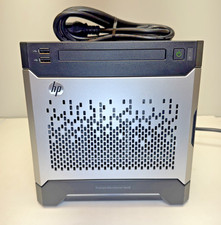
HP ProLiant MicroServer Gen8 G1610T @2.3 GHz, 16GB, 712317-001 NO HDD/OS
$199.00
Supermicro 1U Network Server Appliance 16GB RAM 800GB SSD 6 LAN Ports Powers On
$450.00
Supermicro CSE-937 3U Storage Chassis No CPU No HDD No Ram Tested & Reset
$129.99
Nasuni NF-50 Supermicro Server, Atom CPU C2558, @ 2.40GHz, 8GB RAM-No HDD/OS/AC
$250.00
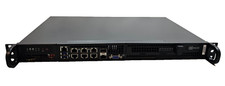
New Barebones Supermicro 5019D Server, 4C/8T Xeon D-2123T, 1U Rackmountable, 10G
$449.99
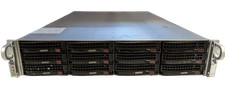
Supermicro 2U X10DRU-i 2x E5-2680 v3 2.5ghz 32gb Ram 240gb SSD 2x GPU *READ*
$369.99
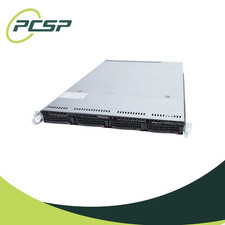
Supermicro CSE-815-5 4B LFF Xeon E3-1245v6 16GB DDR4 1x 9361-8i 4x 1TB SATA HDD
$483.99

Supermicro 5019D-4C-FN8TP Xeon D-2123IT (4C/8T) 64GB DDR4 10GbE 480GB 1U Server
$689.00
Supermicro 505-2 Server
$280.00
Supermicro CSE-937 3U Storage Chassis No CPU No HDD No Ram Tested & Reset
$129.99



 Reply With Quote