

 Reply With Quote
Be aware, this only works if you don't have peristent memory.


.
Another un-advertised new feature in Knoppix 7
Klaus K has included a new 'ramdisk' element in Knoppix 7 for serial
collection of LiveUSB program changes that may be individually compacted
which may then be expanded and added in overlay fashion to the basic
operating system at boot.
A brief description of the use 'ramdisk' to achieve an alternative to
wholesale re-mastering occurs on debian-knoppix at:
http://lists.debian.org/debian-knopp.../msg00005.html
Be aware, this only works if you don't have peristent memory.
Greetings, Werner.
I'm thinking that the KNOPPIX1, KNOPPIX2, etc idea might be a good way to segment the
remastering that one does over time. Into chunks. Some programs here, Some personal tweaks there.
A way to organize things.
Klaus's choices of which directories to save is a puzzlement to me.
For one thing, with an 8 Gb LiveUSB, I mostly can just save the whole overlay as a backup.
My needs for re-mastering have almost disappeared.
I can see where Klaus can use larger chunks of compressed material,
for example a set of non-free programs to go with the CeBIT DVD as KNOPPIX1.
It is a new feature worth calling attention-to.
But it's not all that different than the old update.tar.gz approach.
Last edited by utu; 06-07-2012 at 08:21 PM.
.
First, a historic note:
In post #1 I called some attention to Klaus K's recent murmurings about using
'ramdisk' as an alternative to some of the more recent re-mastering schemes that
use lots of resources and time.
You may be interested to know this is not something new or even new to Knoppix.
Just take a look at:
http://www.oreillynet.com/sysadmin/b...s_wow_jus.html
Now, for something closer to home:
In posts elsewhere on this forum I have touted a little scheme of I think-of as
'partial backups'. I try to keep track of the tweaks I use and where they go, so
I can collect these in a file update*.tar.gz. I then use the cheatcode note about
how to get this file overlaid on KNOPPIX-DATA and become a part of
knoppix-data.img. I've used this all through Knoppix 6 to back-up my LiveUSB when
I ruin my knoppix-data.img by some inadvertent mistake. Maybe a little clumsy, but
it serves the purpose. my tweaks in update*.tar.gz amount to about 50 Mb which
I store on /mnt-system/ in-between uses.
It turns out, I can read this 50 Mb update*.tar.gz into the Knoppix 7 ramdisk and
produce an equivalent 30 Mb KNOPPIX1. I have to do some juggling with reboots
and using the knoppix noimage cheatcode to accomplish this, but it works.
There are two hidden bonuses in this approach. First, you needn't be very
fastidious about noting your tweaks and where they go. Ramdisk does this for you.
It only retains the directories, and contents thereof it needs to record differences
from an initial compressed image. Second, after all the manipulations you may
once again re-install a persistence file to record retain any additional
changes you might decide to investigate on a more tentative basis than the
ramdisk approach.
You don't need a second system to accomplish all this. I bootstrapped my 8 Gb
Knoppix 7.0.2 LiveUSB from an update*.tar.gz state to a ramdisk-modified version
with persistence using only two special commands and the cheatcode 'knoppix noimage'.
A second system would be a good idea as a backup, but this is just to let you
know it's possible to do without.
The two commands that are crucial are: To transfer update*.tar.gz to /ramdisk/;
and, To create the file KNOPPIX1 you will need to complete this task:Code:sudo tar -xzf /mnt-system/update*.tar.gz - C /ramdisk
I'll work out a turn-by-turn list eventually,Code:sudo mkisofs -R -U home etc KNOPPIX-DATA var (or whatever the ramdisk dirs were) \ | create_compressed_fs -B 131072 -m - - >/tmp/KNOPPIX1
but the first step is rebooting with knoppix noimage to bring in the ramdisk;
next read update*.tar.gz into ramdisk;
next get rid of your original knoppix-data.img and KNOPPIX-DATA;
next make your directory list and issue the second command to produce KNOPPIX1;
next move KNOPPIX1 into the directory that has KNOPPIX and formerly held
KNOPPIX-DATA as well; and
last, but not least, reboot and re-establish persistence, when prompted to do so.
I may have thrown in a few re-boots here and there along the way to see how
things were going. I'll have to make some notes. But the preceeding gives you
the broad outline.
I think there is a sequel to this that Klaus K has defined which describes
how to combine compressed images, but I've not progressed that far yet.
I'm interested to hear the experiences of others with Knoppix 7's ramdisk.
Last edited by utu; 06-14-2012 at 07:47 PM.
.
I have developed a number of changes to Knoppix 7.0.2 and
used the following procedure to save these changes to KNOPPIX1 and
re-establish persistence:
1. In a normal, bare Knoppix 7.0.2, I establish a LiveUSB with
persistence and develop certain changes and try them out, noting
all the steps necessary.
2. I reboot with the cheatcode 'knoppix noimage' and repeat all
the same necessary change steps.
3. I use Klaus K's formula to capture the ramdisk information in
KNOPPIX1, using all the directories I note using 'ls' in ramdisk and no others.
4. I transfer KNOPPIX1 into the same /mnt-system/KNOPPIX/ directory
as the original KNOPPIX file itself.
5. I delete knoppix-data.img, reboot and re-establish persistence.
6. I am pleased that KNOPPIX1 us now doing its job.
Here's what is not going right for me:
I go through steps 1 through 5 with some different changes and
develop and install KNOPPIX2, but without the success in step 6.
The simplest instances of this are to simply use Install-Components or
Aptitude to bring in Flash or ntfs-3g. The ntfs-3g exercise is the one
Klaus K uses to showcase the stacking of KNOPPIX1, KNOPPIX2,.. etc.
I presume this is supposed to work, but I can't seem to make it so.
Any suggestions as to what to look for are welcome.
.
To stack permanent serial compressed image upgrades to KNOPPIX, use the magic incantation,
assuming KNOPPIX1 was the previous upgrade:
cd /
sudo mkisofs -R -U KNOPPIX-DATA | create_compressed_fs -B 131072 -m - - > /mnt-system/\
KNOPPIX/KNOPPIX2
(Sorry this line a little too long for this forum, so used the '\' sign to show it here.)
Then reboot to see if it all works like it did in the previous persistence file.
If so, move knoppix-data.img from /mnt-system/KNOPPIX/ to /mnt-system/ temporarily and reboot.
Re-establish persistence and again verify that KNOPPIX2 is doing what if ought.
When you are really sure KNOPPIX2 and persistence are ok, remove knoppix-data.img.
Dont count on PCManFM to remove things; use root and rm to do this.
init's mountunion() looks like you may have up to ten such upgrades, if you have enough space
on your LiveUSB
By this I mean the 'old' knoppix-data.img in /mnt-system/,Originally Posted by utu

not the 'new' one in /mnt-system/KNOPPIX/.
This first reboot should be with 'knoppix noimage' or 'knoppix64 noimage'
cheatcode, depending on what kernel you were last using.
This allows you to temporarily ignore the current knoppix-data.img without moving or removing it.
On the next reboot, after moving the initial knoppix-data.img, the absence of this
.img is what triggers a request to (re-)establish a persistence file.
Hello utu!
When I read Klaus Knopper's post on the mailing list I decided to try the remastering procedure from the live system myself.
I use a kind of Poor man's install of Knoppix V 7.0.2 inside a VirtualBox 4.1.16. I copied the content of the DVD to the directory knx702 and use Grub as bootloader.
I think that a typical session looks as follows.
1. Boot with "noimage" cheat code.
2. Open root terminal.
3. Issue the following commands.Of course, there are many more useful packages that are not included in the public version of Knoppix 7.0.2 since they are not free like unrar for example.Code:apt-get update apt-get install flashplugin-nonfree apt-get clean
4. Create the archive file KNOPPIX1 from the ramdisk. The options used for makeisofs are the usual ones taken from the "Remastering howto". I use a temporary file on the virtual HDD since I do not have more than 1 GB of RAM available inside my virtual machine. I exclude some directories with files I consider not useful for the archive. Maybe there are more directories.
5. Reboot and enjoy Flash videos in Iceweasel.Code:mkisofs -R -U -V "KNOPPIX1 filesystem" -P "KNOPPIX1" \ -hide-rr-moved -cache-inodes -no-bak -pad \ -x /ramdisk/var/lib/apt/lists -x /ramdisk/dev \ -x /ramdisk/var/log -x /ramdisk/var/run /ramdisk | nice -5 \ /usr/sbin/create_compressed_fs -b -B 65536 \ -f /mnt-system/knx702/isotemp - /mnt-system/knx702/KNOPPIX/KNOPPIX1
Comments and suggestions are always welcome.
Greetings. Klaus2008.
Nice to hear from you.
Glad to see someone carry-through on Klaus K's example.
I thought his example was hard to follow, myself.
Also, it left me puzzled on how to carry-on for subsequent images.
You are using a lot of options, I'd like to know more about each of these.
In some of my prior efforts I tried to cast out anything that had Cache or cache
in its name.
I like this one of Klaus K's idea because I can do it all within the resources
of my 8 Gb SDHC. No additional system, virtual or otherwise, no additional
workspace needed, no hours-long processing needed.
As an unexpected plus, I just cloned a new 8 Gb SDHC, and would-you-believe?
The clone has KNOPPIX1, KNOPPIX2 and persistence right away, ready to go.
Anxious to hear how you progress thru KNOPPIX2, KNOPPIX3, etc.
 Posting Permissions

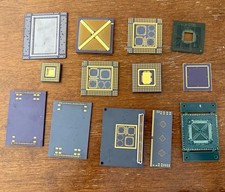
Vintage Intel Mainframe Server MCM CPU Substrate Lot Prototyping PGA Validation
$500.00
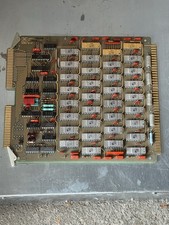
HP 5060-8359 8K Semiconductor Memory Module 5080-9747 Vintage HP Computer
$224.72
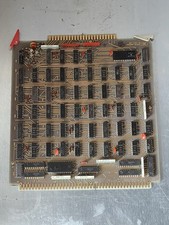
HP 13210-60001 Disc Drive Interface PCB HP 7900A 7901A Vintage
$225.61
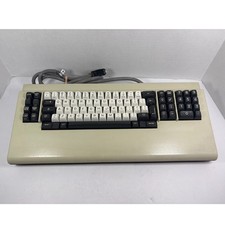
Vintage Telex 952003-112 Mechanical Terminal Keyboard IBM 3270 Mainframe DB25
$799.00
Vintage Mainframe Computer Disk Drive Pack Dyson SMD 5 Level Disks
$79.00
Commodore 64 PC with Model 1541 Diskette Drive and Flight Simulator II *READ*
$199.99
Vtg IBM Mainframe Prototype Chip Module Lot 146 pc 1988-1993 ES/9000 Lab Arcive
$649.00
Rare Vintage Mainframe Burroughs Discrete-Transistor Cordwood Module B2500/B5000
$99.95

Vintage UNIVAC 3620670-01 Mainframe Logic Board 15MHz Sperry Computer PCB
$98.95
IBM 3274-51C Controller 3270 mainframe 8" floppy tested to power on
$500.00