

 Reply With Quote
i think what u are asking is how to install to a hard drive. as many have said before, RTFM!!! or atleast, RTFF (RTF Forum). it is sudo knx-hdinstall

Are there nay tricks to installgin knoppix s a HD i go tthis form teh slackware site
Q: Can my ZipSlack installation be moved onto a real Linux partition?
Yes, it can. Here are the steps you'll need to follow to migrate your installation onto a Linux ext2 partition:
Define a Linux partition using fdisk or cfdisk. If you find it easier, you can use DOS or Windows tools to create the partition and then use Linux fdisk to change the partition type to 83 (Linux native).
Format this partition with 'mke2fs'. For example, if your new Linux partition is /dev/hdb1 you'd use the following command:
mke2fs /dev/hdb1
Formatting destroys the existing filesystem on the partition, so make sure to format the correct partition!
Mount the new partition on /mnt. In the case of the example above, this command will do it:
mount /dev/hdb1 /mnt
Make a few directories on the new partition:
mkdir /mnt/cdrom
mkdir /mnt/mnt
mkdir /mnt/proc
Now it's time to actually move the data. First you'll need to set your 'umask' to 000 to correctly preserve all file permissions, and then you'll copy the top-level directories (other than cdrom, mnt, and proc) and the kernel file (vmlinuz) onto the new Linux partition:
umask 000
cp -a /bin /mnt
cp -a /boot /mnt
cp -a /dev /mnt
cp -a /etc /mnt
cp -a /home /mnt
cp -a /lib /mnt
cp -a /root /mnt
cp -a /sbin /mnt
cp -a /tmp /mnt
cp -a /usr /mnt
cp -a /var /mnt
cp -a vmlinuz /mnt
If you've made any new top-level directories that you want to save, copy them over to the new partition in the same way.
Edit the /mnt/etc/fstab. Change the device listed for the '/' partition to the new Linux partition's device.
That's it! Your system should be ready to boot on the new partition. To do that, you can use loadlin (if it's installed on your DOS or Windows partition), or a bootdisk. Once you've booted the new partition you can proceed to set up LILO if you like. Note that when you boot a native Linux partition you should boot it in read-only mode (unlike UMSDOS). This allows it to do automatic filesystem checking periodically, or if the machine is ever shut down improperly. To boot a partition in read-only mode, add 'ro' instead of 'rw' to the bootdisk or loadlin command line.
Since this operation must be done as root and involves dangerous operations like using fdisk, you need to be careful to avoid losing data. But, if you can migrate your installation successfully, you've earned your intermediate Linux sysadmin merit badge. :^)
I wanna knwo what unmask does::::::
And also any tips or hints...

i think what u are asking is how to install to a hard drive. as many have said before, RTFM!!! or atleast, RTFF (RTF Forum). it is sudo knx-hdinstall
>> I wanna knwo what unmask does... And also any tips or hints...
--The ' umask ' command sets the file permissions when a new file is created, and is related to the chmod command.
From ' man umask ' (the actual doc is in ' man bash ' and you have to search for it by typing '/umask' and hitting 'n' a couple of times: )
--Octal is base 8. (Actually 0 thru 7.) From my tips page ( http://wolfrdr.tripod.com/linuxtips.html#filemanip ) :Code:umask [-p] [-S] [mode] The user file-creation mask is set to mode. If mode begins with a digit, it is interpreted as an octal number; otherwise it is interpreted as a sym bolic mode mask similar to that accepted by chmod(1). If mode is omitted, the current value of the mask is printed. The -S option causes the mask to be printed in symbolic form; the default output is an octal number. If the -p option is supplied, and mode is omitted, the output is in a form that may be reused as input. The return status is 0 if the mode was successfully changed or if no mode argument was supplied, and false otherwise.
--Note that the default umask is (I think) 666, which is "RW-" (Read+Write, and not Execute) for Owner, Group, and AllOthers. This value is normally set in one of the startup scripts, and individual users (such as root, knoppix, etc) can redefine it in their own personal login scripts.Code:chmod == Modify file attributes for: + User, Group, AllOtherusers (non-group), or Allusers + + Note: For readability, '.' in the LS example stands for any value + (Command example does not affect this position) + + Note: For readability, '-' in the LS example stands for No access + (Command example DOES affect this position) + + Note: For the purposes of brevity, all ' LS ' examples for chmod are assumed ' LS -L '. ' chmod -cv +x <file> ' == Make Executable for Owner(?) (LS == ?..x...... ) ' chmod -cv a+x <file> ' == Make file executable for All users (LS == ?..x..x..x ) ' chmod -cv u+rwx <file> ' == Make file Read,Write,Exec for User(Owner) (LS == ?rwx...... ) ' chmod -cvR g+rwx <file*> ' == Make files Read,Write,Exec for Group (LS == ?...rwx... ) ' chmod -cvR o+rwx <file*> ' == Give access for AllOther users not in Group (LS == ?......rwx ) ' chmod -cvR o-rwx <file*> ' == Remove access for AllOther users not in Group (LS == ???????--- ) ' chmod -cv a-rwx <file*> ' == Remove ALL access for ALL users except root Chmod addendum/shortcut from Glenn Milley: "Chmod may also be revised or set using an octal value, with a three digit sequence (req'd.), or alternatively with a fourth, leading digit. The relation between the alpha designations and the octal are shown below: ===== ( Optional fourth leading digit: ) s 4 Set user ID (SUID; usually root) on execution s 2 Set group ID on execution t 1 Set sticky bit ===== ( Regular settings: ) r 4 Read \ w 2 Write > Add these together for each position (user,group,other) x 1 execute / Special Characteristics User/Owner Group Others (u) (g) (o) -------------------------------------------------------- 4 (s) 4 4 4 (r-typical) 2 (s) 2 2 2 (w-typical) 1 (t) 1 1 1 (x-typical) Now you just make the selections and add the values in the appropriate column, e.g., chmod 4755 <file1> is the same as, + chmod u=srwx,g=rx,o=rx <file1> To set Read,Write,Execute for userid only on a file and deny all other access: + chmod 700 <file> Note that the "=" sign defines permissions, a "+" would add and a "-" remove."
--BTW, probably one of the easiest ways to copy files is by using ' mc ' if you have it installed. (Knoppix does, by default.)
[/code]Originally Posted by Tigren
Yes i was exactly askign hwo to isntall to HD..... that is before i was informed that ther eis the knx-hddinstall script itn there....
but the install still isnt' knoppix.. ti's jsut debian... : /
Thanks for letting me know what unmask meansI loev learnign new things.. ( and i know next to nothing about linux.. so i'm learnign ltos)
What do you mean _just_ Debian?
;>
Knoppix isn't a distro. It's a very well scripted live CD Debian installation. Debian is one of if not the best distros out there.
 Posting Permissions

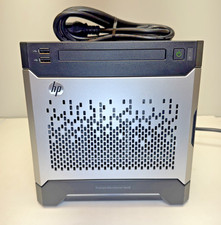
HP ProLiant MicroServer Gen8 G1610T @2.3 GHz, 16GB, 712317-001 NO HDD/OS
$199.00
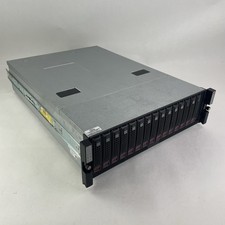
Supermicro CSE-937 3U Storage Chassis No CPU No HDD No Ram Tested & Reset
$129.99
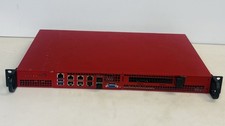
Supermicro 1U Network Server Appliance 16GB RAM 800GB SSD 6 LAN Ports Powers On
$450.00
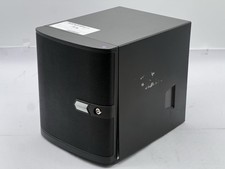
Nasuni NF-50 Supermicro Server, Atom CPU C2558, @ 2.40GHz, 8GB RAM-No HDD/OS/AC
$250.00
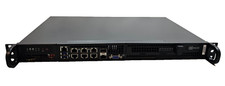
New Barebones Supermicro 5019D Server, 4C/8T Xeon D-2123T, 1U Rackmountable, 10G
$449.99
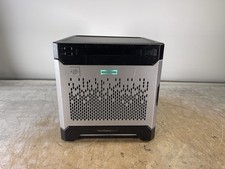
HP PROLIANT MICROSERVER GEN8 E3-1220LV2 @ 2.30GHz, 8GB RAM, NO HDD/OS
$164.97

Supermicro CSE-815-5 4B LFF Xeon E3-1220v5 16GB DDR4 1x 9361-8i 4x 1TB SATA HDD
$477.00
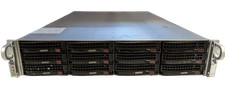
Supermicro 2U X10DRU-i 2x E5-2680 v3 2.5ghz 32gb Ram 240gb SSD 2x GPU *READ*
$369.99
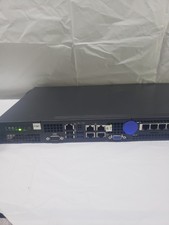
$280.00
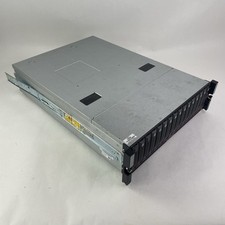
Supermicro CSE-937 3U Storage Chassis No CPU No HDD No Ram Tested & Reset
$129.99