-
Faster Knoppix?
Hey..
ive just got knoppix working on a 233 mhz pc... but now i see that it runs terribly slow (at initializing the KDE.. i keep getting a greyish screen with a Cross as the mouse pointer for about 5 mins.. then it finalyshows it how it should..)
system specs:
233 mhz
8x cdrom speed (its probably that, eh?)
96 mb ram
2 harddrives (one 1.99 gb, one 1 gb (which i need to format cause i cant access it.... NTFS..  ))
))
Is there maybe a option to run a faster graphical interface?
if so: how/where etc?
thanks!
-
Senior Member
registered user
Re: Faster Knoppix?

Originally Posted by
Megagun
Hey..
ive just got knoppix working on a 233 mhz pc... but now i see that it runs terribly slow (at initializing the KDE.. i keep getting a greyish screen with a Cross as the mouse pointer for about 5 mins.. then it finalyshows it how it should..)
system specs:
233 mhz
8x cdrom speed (its probably that, eh?)
96 mb ram
2 harddrives (one 1.99 gb, one 1 gb (which i need to format cause i cant access it.... NTFS..
))
You are at the bare minimum requirements for booting into KDE w/ only 96M RAM. It's no suprise that it's slow. I run knoppix from hdd on a 233 w/ 160M- it's pretty nice.
Is there maybe a option to run a faster graphical interface?
if so: how/where etc?
thanks!
Yep there sure is- check out the cheat codes. (they can also be found by hitting F2 as soon as you get to the boot screen. Perhaps try Fluxbox or Ice
-
Try knoppix desktop = {fluxbox | icewm}
I recommend icewm; it looks a lot more "usable" 
-
Senior Member
registered user
Either more memory (it should be very useable with Kde with 256Mb of Ram) or a "lighter" window manager.
-
Senior Member
registered user
It is very useable with Kde with 256Mb of Ram.
I went to 512MB, a lot better - about 125 MB Free Physical Memory left unused.
Linux EAT'S Memory!!!
When I ran it from CD w/256MB Memory - it was Slow, a lot quicker on HDD.
Gigabyte GA-7DXR w/ AMD XP 1600+ & 512MB MEM [PC266] & 40GB HDD (ATA100)

-
Senior Member
registered user
Originally Posted by
TheCyberDude
Linux EAT'S Memory!!!
Not really. Your RAM will usually be full unless you just rebooted. Since calls to hdd are slow, whenever the cpu needs info it first looks to the RAM then the hdd if it isn't found in RAM. If it does access the hdd, it will load what it needs and what ever is stored around it. This happens because it assumes that since you are accessing memory location X00X right now, you will likely need X00X plus or minus 1 shortly so it loads it now to save time in the future. Whatever has been idle in RAM the longest is the first to be removed when more RAM is needed. Most of the used memory is just disk buffer space which shrinks as real code needs more RAM. Of course more RAM is always nice- makes alot of things happen faster but Linux does not eat RAM. Wondoze on the other hand has more memory leaks than the CIA. That's why you can only leave a M$ box running for so long before you have to reboot it.
-
Junior Member
registered user
Originally Posted by
rickenbacherus
Originally Posted by
TheCyberDude
Linux EAT'S Memory!!!
Not really. Your RAM will usually be full unless you just rebooted. Since calls to hdd are slow, whenever the cpu needs info it first looks to the RAM then the hdd if it isn't found in RAM. If it does access the hdd, it will load what it needs and what ever is stored around it. This happens because it assumes that since you are accessing memory location X00X right now, you will likely need X00X plus or minus 1 shortly so it loads it now to save time in the future. Whatever has been idle in RAM the longest is the first to be removed when more RAM is needed. Most of the used memory is just disk buffer space which shrinks as real code needs more RAM. Of course more RAM is always nice- makes alot of things happen faster but Linux does not eat RAM. Wondoze on the other hand has more memory leaks than the CIA. That's why you can only leave a M$ box running for so long before you have to reboot it.
*applause* 
Also, how do you know Linux eats RAM? If you're comparing to the Windows NT/2000/XP Task Manager you're comparing apples and oranges. The Windows Task Manager shows how much RAM is actively in use and displays everything else as "free". If you do a "free -m" in Linux (or use a memory monitoring app) you will likely get the pages cached in RAM as well...which of course makes it look like Linux is eating it all up.
Similar Threads
-
By 149047 in forum General Support
Replies: 2
Last Post: 05-27-2005, 03:20 PM
-
By ijuz in forum Customising & Remastering
Replies: 6
Last Post: 02-07-2005, 05:02 AM
-
By alex52 in forum General Support
Replies: 4
Last Post: 12-27-2004, 12:41 AM
-
By rigurat in forum Customising & Remastering
Replies: 5
Last Post: 02-07-2004, 10:30 AM
-
By Superstoned in forum Ideas
Replies: 7
Last Post: 01-28-2004, 03:33 PM
 Posting Permissions
- You may not post new threads
- You may not post replies
- You may not post attachments
- You may not edit your posts
-
Forum Rules

HP ProLiant MicroServer Gen8 Tower Server Xeon E3-1220 v2 2.3GHz 16GB RAM
$289.99
HP Proliant MicroServer Gen 8 2.23GHz Xeon 16GB RAM NO SSD
$249.99
Supermicro E300-12C Mini 1U Barebone X12SCV-LVDS LGA1200 SNK-P0073A4 w/ Adapter
$225.00
Supermicro CSE-937 3U Storage Chassis No CPU No HDD No Ram Tested & Reset
$129.99
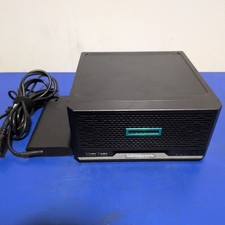
HPE ProLiant MicroServer Gen10 Plus with Power Adapter
$600.00

Supermicro 5019D-4C-FN8TP Xeon D-2123IT (4C/8T) 64GB DDR4 10GbE 480GB 1U Server
$649.00
New Barebones Supermicro 5019D Server, 4C/8T Xeon D-2123T, 1U Rackmountable, 10G
$449.99
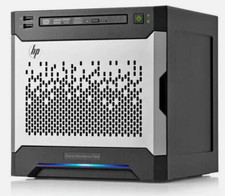
HP MicroServer Gen8 LOADED 12TB + 16GB RAM Win Server 2025 iLO Advanced SSD Boot
$679.00
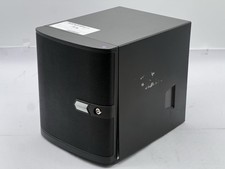
Nasuni NF-50 Supermicro Server, Atom CPU C2558, @ 2.40GHz, 8GB RAM-No HDD/OS/AC
$250.00
Supermicro 938-16 16-LFF MicroCloud SuperServer 5038MR-H8TRF *No Blade Servers*
$159.99



 Reply With Quote