

 Reply With Quote
Can you somehow backup your files and reinstall?
Regards,
AJG


I have been working, over the past few weeks, creating analog to digital speach files - using ReZound, and ALSA for sound. All was working well, I had gotten all 8 45 to 50 minute tapes digitally recorded as ReZound files on the hard drive. Then went through all the "main" big audio files, making smaller, individual "speach" files as WAV. (all 135 of them) - that too, was going good.
I then went through all 135 individual WAV files cutting pre and post silence from them, that as well went good...
I then went through all 135 WAV files, using K3b, to formulate how many, and what audio files could fit on "n" amount of Audio CD's. (which is 10)
Last step was to actually "burn" the audio cd's - Starting with speach 1, CD#1 - I got all the way up to speach 102, and CD#7 - in which case, K3b locked the complete system up - no nothing. Had to hard reset the system... (this is where I think my problem has started from)
I tried to do a "file" on speach 102 - which, again, locked up the system, and required a hard reset to regain control.
I deleted the speach 102 WAV file, and used my "master" big ReZound file to generate a new speach 102 WAV file - ran "file" across the new file, and was fine. Restarted the system, and upon reboot, tried another "file" on speach 102 - system locked up again - and again, had to do a hard reset to get the system back.
I did this "delete/regenerate/file" thing two more times on speach 102 - and same results happen - the system goes completely frozen - not even the clock is updating, no mouse, no keyboard control - nothing...
I have rebooted so many times, that even fsck had fired off to check both the hda1 and where the speach files are located, hdc2, have been given clean bills of health... Noting only that when I get these locked systems, I usually get hda1 showing recovery and one inode being removed because it no longer points to something...
On the last attempt, I can't even open the "main" speach file used by ReZound that contains my individual speach 102 in it, along with 10 others - ReZound is now causing a complete lock on the system...
Copy/paste of dmesg on my hda1 device - which is where Knoppix is hard drive installed on:
What scares me now is, the "revoked" in the above, and the fact that I think I am watching my whole system eat itself alive... To the point that I am going to not be able to run, or do, anything...Code:VFS: Mounted root (ext2 filesystem). Journalled Block Device driver loaded (recovery.c, 256): journal_recover: JBD: recovery, exit status 0, recovered transactions 108429 to 108461 (recovery.c, 258): journal_recover: JBD: Replayed 3017 and revoked 9/30 blocks kjournald starting. Commit interval 5 seconds EXT3 FS 2.4-0.9.19, 19 August 2002 on ide0(3,1), internal journal ext3_orphan_cleanup: deleting unreferenced inode 2883864 EXT3-fs: ide0(3,1): 1 orphan inode deleted EXT3-fs: recovery complete. EXT3-fs: mounted filesystem with ordered data mode.
help - Help - HELP
I was starting to make progress on catching up on my business work, this being a VERY important contract for this work I am doing currently, I am not able to get anywhere now with it - worse part is - my system appears to be going into an "implode" mode now. The more I try to get done, the more that seems to be getting the system stuck in this lock mode - nothing has changed on the system, no new installs, no removals, and it was fine last night, this morning I am just doing the same things I was doing last night, what worked before, is now causing catastrophic lock-ups on my system...
Anyone, please help...
Cuddles
Can you somehow backup your files and reinstall?
Regards,
AJG
I'm not at all sure what went wrong, but it occurs to me that ReZound is locking up because that one big file has chunks missing (the deleted inodes).
Lessons from this:
1.If at all possible, use alt backspace (it may be that only X is locking up) if that fails, use the magic keys rather than a hard reset. It's a hard lesson, and one someone pointed out to me a while back:
Press:
Alt + SysRq
(with these two held down) next press in order:
r s e i u b
Often (but not always!) one of these two will do the job.
2. Have a seperate /home partition (if you don't already).
I'm not sure why you're using wav files when ReZound will output to ogg. Wavs are huge and are more likely to overstress your system. Of course, you could/should do a quality comparison.
K3b has come on a lot recently, but a command line interface is much less likely to fall over than a GUI one. If you still have the HOWTOs, then
file:/usr/share/doc/HOWTO/en-html/CD-Writing-HOWTO-3.html#ss3.2
is useful although I'd be a bit wary of some of the Perl recipies as they may relate to an earlier version of Perl.
As for your current predicament, I fear that you may just have to find that file (as root do updatedb, then exit and run locate name_of_file) and rm it.
It's usually good practice to either take a rest or to do small bits at a time (maybe one CD's worth). OK, so we all know that, but how many of us do it?
Apart from what's happened to your work, I'd not worry too much about the deleted inodes: they almost certainly don't come as tidings of imminent system meltdown.
What in the world
This kind of "just re-install" I would EXPECT in Windows, not Linux - where is the "stability" in an operating system, when the only resolve someone has is to "just re-install" ????
N O
I can not just re-install - this is NOT an option. I did the "just re-install" thing three times now. Once to get my old system over to my new system, Second to get my modem to work, and Third to get ALSA working - now, as I am getting something else on my system going - the solution AGAIN is to re-install - NO - NO WAY...
As for the magic keys - shesh, can you have "invented" anything less complicated ? In windows you have the "three finger salute", whereas in Linux, you have to do the "four finger salute" - now we have this "contorsionistic" set of key presses to do what??? Regain system control ???? The keyboard is locked, the system is locked, nothing is running, its dead when this happens...
How about this as an idea -=- The sound file (speach 102) is on my new 80 gig hard drive, the ReZound "main" 45 to 50 minute file used to generate these "smaller" speach files IS ON THE SAME DRIVE. K3b was trying to burn from files on the SAME DRIVE - when the system locks up, it is when I am doing "something" on the 80gig hard drive - this drive is hdc2 - whereas my system is located on hda1...
Could this be a failing hdc2 device???
How about some routines, or utilities, that can test the device? Or the file system on the device? Or the files on that device?
fsck doesn't seem to think that the "file system" is a problem, does it also test the files? I also noted during one of these "fsck" checks on the hdc2 device (80gig) that 24.5% was non-continueous - the device is not even 20% full - I thought that fsck checked and corrected these "defrag" issues?
Anyone have a disk test utility, something that I can ensure that my new hard drive, which apparently seems to be at the "root" of a common problem (system lock ups) may be causing these problems???
Thanks...
Cuddles
I'm not talking of a re-install, but of a re-doing of your work. Just the sound files.
Having said that,well,Could this be a failing hdc2 device???you mean non-contiguous, but this is one alarming figure. I've never seen more than 5%. Something is very screwy here. Can you post your /etc/fstab? Looks to me as though that drive has never been routinely fscked. But I think it's unlikely to be the drive itself, that is, on a hardware level (I'm guessing you have -- can't remember the name of it -- is it SMART? -- anyway, the tests that check the drives in the bios enabled and that no errors have been flagged).I also noted during one of these "fsck" checks on the hdc2 device (80gig) that 24.5% was non-continueous
If you have space, you might like to simply drag and drop the files onto your good drive and see what happens.
I know of no way of checking individual files (at least, at this point), only the filesystem.
Fingers99, you are MY saviour, you know that, don't you ????
A little background on this hdc device...
I added the 80gig HD after hard drive installing Knoppix v3.3 to the hda1 device - so a fstab entry had to "manually" be setup...
I hardware installed the 80gig hard drive, then booted into Knoppix/Linux, did a mkfs.ext3 (I think this was the command, from root), set up the /gblusr/hdc2 directory with all rights, and then setup the fstab...
Originally, the fstab was the following:
With my extensive usage of my "main" system hdc1 device, which is only a 41gig, I began to move, and create these 400meg WAV/REZ files onto the hdc2 device, and I changed the fstab entry to be the following:Code:/dev/hdc2 /gblusr/hdc2 ext3 defaults,user,exec,noauto 0 0
Then I read a little on the mount, and fstab man pages, and changed the fstab file to the following reversion:Code:/dev/hdc2 /gblusr/hdc2 ext3 defaults,user,exec 0 0
Which, upon first boot with this fstab entry, caused fsck to "force" checking, since it hadn't done so for like 497xx days, or something like that...Code:/dev/hdc2 /gblusr/hdc2 ext3 defaults,user,exec 0 2
With all the problems I have been having, only with hdc2 device, I have reverted back to a NON-AUTO mount of the device, so my fstab file looks like this now:
If all this comes down to is that my hdc2 device is failing, or needs to be re-formatted, I can re-do all the 135 sound files from scratch, that isn't as much of a problem as my system crashing on me...Code:# /etc/fstab: filesystem table. # # filesystem mountpoint type options dump pass # Main HD part1 Linux OS FS /dev/hda1 / ext3 defaults,errors=remount-ro 0 1 # Main HD part3 Linux Swap /dev/hda3 none swap sw 0 0 # USB hub mount point none /proc/bus/usb usbfs defaults,user,noexec 0 0 # proc /proc proc defaults 0 0 # Secondary HD part1 VFAT DOS FS /dev/hdc1 /gblusr/dosd vfat defaults,user,noauto,exec,umask=000 0 0 # Secondary HD part2 Linux FS /dev/hdc2 /gblusr/hdc2 ext3 defaults,user,exec,noauto 0 0 # SanDisk USB /dev/sda1 /gblusr/sda1 vfat noauto,users,exec,noatime,umask=000 0 0 # Remaining devices /dev/fd0 /floppy vfat defaults,user,noauto,showexec,umask=022 0 0 /dev/cdrom /cdrom iso9660 defaults,ro,user,noexec,noauto 0 0 /dev/cdrom1 /cdrom1 iso9660 defaults,ro,user,noexec,noauto 0 0 /dev/dvd /dvd iso9660 defaults,ro,user,noexec,noauto 0 0 /dev/cdaudio /cdaudio iso9660 defaults,ro,user,noexec,noauto 0 0
Thanks for any assistance,
Cuddles
Fingers99, you are MY saviour, you know that, don't you ????
It's too late at night here for me to think straight, but, FWIW, my entries in /etc/fstab (and the order of my disks is very strange and will be resolved when I get round to it!) are like this:
# root partition
/dev/hdc1 / ext3 defaults,errors=remount-ro 0 1
# seperate /home partition
/dev/hdc3 /home ext3 auto 0 0
#drive where I keep Buffy movies and multi-media stuff
/dev/hda /mnt/mp3 ext3 auto 0 0
Now, check this with Stephen or Eadz, but I think I used to have a 0 2 entry in my /etc/fstab and noticed it wasn't getting fstabed, so I went back to Eadz's suggestion of 0 0 (I think it was Eadz). I'd read the manpages and either the man page is wrong or I'd managed to misinterpret it. Although my system gets a lot less throughput than yours, it's very stable (odd X crash aside, except when my Neuros objected to not having sync in the sda1 /etc/fstab line).
But do check. Those folk are (seriously) good.
the auto should be just fine.
I'd see if I could copy (maybe just the odd "finished" file at a time) onto some kind of media and then reformat. As a temporary measure, you could even comment out the (slightly suspect) HD in /etc/fstab and disconnect it so you could then get on with burning some disks and earning some money!
You'll probably find (but this is something to do later) that the manufacturer of the HD has some kind of diagnostic utility on their site. Often they seem to need a dos boot disk to run, but I think there's one (DOS boot disk, that is) somewhere with Knoppix.
Time for bath and bed!
A nice collection of most of the available HW diagnostic stuff:Originally Posted by fingers99
http://www.ultimatebootcd.com/
Boots directly off the CD so it should work regardless of what OS one has installed.
--Fingers, what you really mean to say is use Ctrl-Alt-Backspace to try and kill the X-server. Alt-Bkspc alone won't do it.
--To me, it sounds maybe like a DMA error on the HD.
--Cuddles, pls post results of (root):
' hdparm /dev/hda ' as well as hdc... DMA usually gets enabled in /etc/init.d/bootmisc.sh.
--As an aside, Cuddles - the Alt-Sysrq sequence is still a 3-finger combo. What the keys do, in order:
Alt-Sysrq-R: unRaw (not needed usually)
Alt-Sysrq-S: SYNC all pending writes to HD's
Alt-Sysrq-E: Send sigTerm to all processes
Alt-Sysrq-I: Send sigKill to all
Alt-Sysrq-U: Umount (remount all partitions R/O)
Alt-Sysrq-B: ReBoot
--Note: You should wait a few (2-5) seconds between each sysrq request, so all the writes can commit and things have a chance to settle down. To get help on Sysrq, get to a text console and hit Alt-Sysrq-H. (Make sure to use the LEFT Alt key.)
--AFA testing the HD: Boot knoppix cd into runlevel 2:
boot: ' knoppix 2 vga=normal ' (and whatever other codes you normally use)
' badblocks -c 128 -s -v /dev/hda ' == Equivalent to "surface scan"; tests R/O for bad sectors on entire disk.
--Also run badblocks for /dev/hdc. (There is additionally a non-destructive R/W mode; see ' man badblocks '.)
--1st thing I did after ordering a new 80GB Hitachi drive about a month ago, even before partitioning, was run badblocks R/W on the entire drive - and sure enough it went bad on me during the test. I sent it back and exchanged it for a Seagate 80GB. The Seagate tested OK and is doing fine. Remember to put a HD fan on the drive if it's 7200rpm or greater - they will help the drive last longer.
--Finally, if you have to replace the HD I would recommend the following:
o Test the entire new HD with badblocks in "destructive R/W mode" before partitioning it, to see if it fails.
o If it passes, consider formatting it with Reiserfs instead of ext3 (yes, I'm just a little biased) with the "noatime" mount option:
--If you will likely have more Large files than small on the partition, (or if you value speed over space-savings) "notail" makes sense as well. But I basically put that "noatime" option on *all* my Linux mounts, and 99% of my partitions are Reiserfs; and I haven't had a significant problem with that setup for YEARS.Code:/dev/hdb11 /mnt/bkps2 reiserfs defaults,noatime,notail,rw 0 0
O K - this doesn't make any sense, someone explain why this works
Attempt was made to copy needed files off the hdc device (this includes, from my fstab file above, my Win98 install, and files, and my Linux "storage" area partitions) - the Win98 partition wasn't having problems, but when attempting to copy off stuff, my system hung - as it has before... The backspace trick did nothing, and the magic keys did nothing as well - a hard reset was the only way to get the system back.
As a try, I disabled the DMA on hdc device, all my other devices, including hda, have had DMA enambed from day one - rebooted and checked hdparm to ensure DMA is disabled on hdc, and it was...
I then tried to copy off my Win98 files, and it worked. On a roll, I went after the Linux storage (hdc2) - more than 15gig of files, started the copy, and it completed in around 1.5 hours of "constant" running - w/o a hitch... WHAT GIVES?????????
Why did DMA cause (assumption) this problem, especially when it was ALWAYS on all this time, and NOW, disabling it resolves the problem??? The same fstab file was unchanged, only DMA was disabled on this device... Could DMA have been the ONLY culprit on this issue all along??? How??? Why??? And why, now, without anything changing, is it not working, when all along it was working, without problems???
I was able to copy all my files (sound files, taking approximatelly 14gig) off the drive, after DMA was disabled, and when viewing and playing these "copied" files on to the hda device, I can play them, ReZound was able to load them, XMMS was able to play them, even speach 102, without problems, and I was able to "burn" the Cdrom#7, with this troublesome speach102 w/o problems....
Someone explain to me what was going on, and why DMA (could) be the problem, when all along it wasn't a problem????
Thanks for any information on this, I can't fathom why,
Cuddles
PS -=- "smart" was disabled on BIOS from day one, and Knoppix is not enabling it, from what I can tell.
 Posting Permissions

Computer Photo History Altair 8800 Philco 212 CDC 6600 DEC PDP-8 Apple 1 UNIVAC
$69.99
S-100 Vector Graphic 64K Ram Board (Altair, IMSAI)
$99.95
S-100 Vector Graphic 12K PROM/RAM Board (Altair, IMSAI)
$99.95
S-100 Bus Handbook Altair 8800 IMSAI 8080 Board Schematics Xitan Pertec Cromemco
$89.99
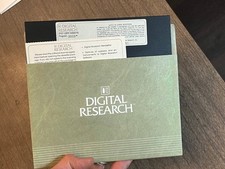
Vintage Digital Research ZSID 1.4 8" Floppy Disk CP/M Z80 Software S-100 Altair
$69.99
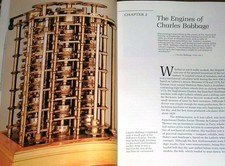
Intel 4004IBM Mark 1 UNIVAC Cray-1 Babbage ENIAC Apple 1 Steve Jobs MITS Altair
$50.99

Altair MITS S100 Backplane 8080A S-100 Replica IMSAI CP/M (bare board)
$40.00

BYTE Magazine Cover Jan 1977 Canvas Print 8"x10" Retro Computer Altair 880
$7.00
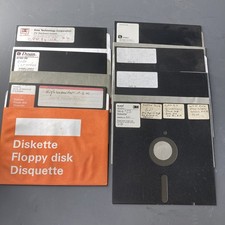
CP/M 86 1.1R 8086 Highmonitor 8 Inch Floppy Diskette 80s IMSAI Altair
$29.99
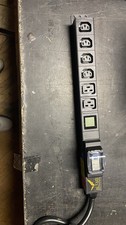
ALTAIR Bitcoin Mining Solutions PDU IEC SERIES 100-250V 30A/24A Power Distribute
$99.00
